2 Timothy 4 (WEB)
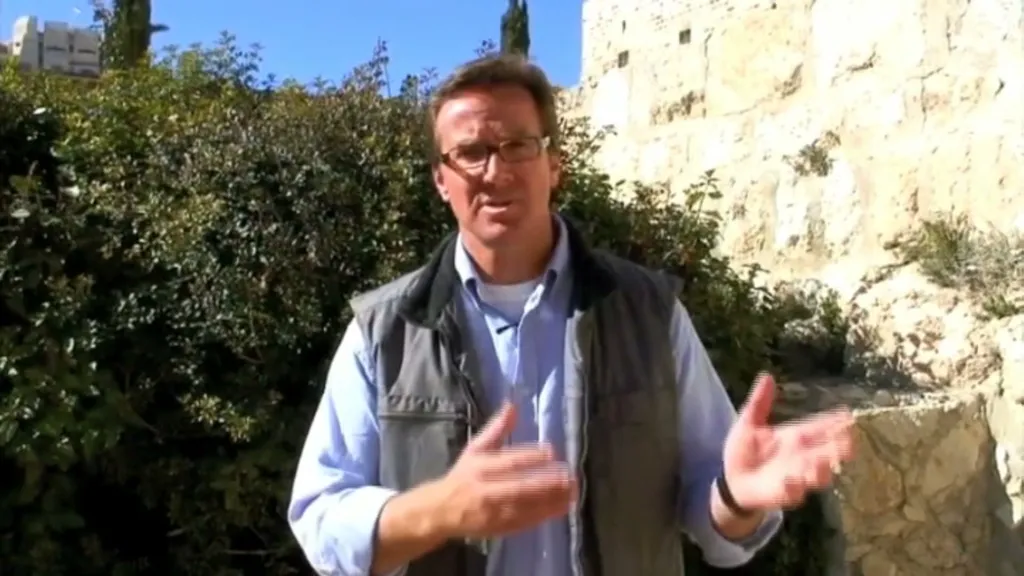
Drs. Holden, Geisler and House speak about New Testament Manuscripts (Number 2 Portion of Archaeology and the Bible, Top Ten Amazing Discoveries, produced by Joseph Holden). Used by permission.
The 27 books of the New Testament were written between AD 40 and 100.
We don't have the originals, so we're going to have to ask the question, how good are the copies?
Today, scholars are using thousands of New Testament manuscripts to reconstruct the original text.
For example, the Codex Sinaiticus, discovered in the early 1800s, offers us a complete New Testament dating to 350 AD.
In addition, we have the John Rylands fragment, which offers us a date of 125 AD for a small portion of John 18.
Today we can be confident knowing that what we're reading in our modern English Bibles is what was written centuries earlier.
There are actually about 5,700 manuscripts of the New Testament — now, that's just in Greek.
Greek manuscripts from the 2nd to the 15th century, and they go all the way back to the threshold of the 1st century.
The John Rylands fragment, for example, beginning about 117 AD — and John wasn't written until about the 90s.
So here you have a piece of a manuscript that goes right back almost to the exact time period, and they show us that the Bible is accurately copied,
it's authentic, the message of the Bible is true.
The manuscripts show us that we have an accurate copy of the Bible in minute details, and that every book from the ancient world survives on 10 to 20 manuscripts, where we have 5,700 biblical manuscripts.
The biblical manuscripts are much more accurately copied than the other manuscripts — 99 plus percent accuracy, compared to 95 or 90 percent accuracy.
So they overwhelmingly confirm that the Bible can be trusted.
Mount Sinai, Egypt was the site of one of the most important biblical manuscript discoveries in history.
As modern archaeology grew in the 19th century, an adventurous few set out in pursuit of early manuscripts of the Bible.
Constantine von Tischendorf was a noted German biblical scholar who understood the necessity of establishing numerous and exact collations of the biblical text.
In 1844, Tischendorf came here to the St. Catherine's Monastery at the base of Mount Sinai.
He discovered something more than he could bargain for.
His worldwide search for New Testament manuscripts yielded the Codex Sinaiticus, the world's oldest New Testament scriptures written in Greek, dating to about 350 AD.
He took 43 sheets of this codex back to the University of Leipzig, where they remain to this day.
He returned here in 1859 and took away 347 more folios, and brought them to the Russian Tsar Alexander II.
In 1933, the British ended up purchasing these 347 folios and placed them into the British Library, where they remain to this day.
So ultimately, there are four countries that have the Codex Sinaiticus: Germany, Egypt, Great Britain, and Russia.
Well, those early manuscripts of the New Testament, like the Vaticanus and Sinaiticus, are manuscripts that give us almost complete copies of the Bible, and very early copies.
So they are some of our best manuscripts, because the other manuscripts before that, most of them are fragmentary or just a book of the Bible, like the Bodmer Papyri from 200.
Very valuable, and you have a whole book, you have a whole gospel and some epistles, but you don't have the whole of the New Testament, which you do when you get to the Vaticanus and Sinaiticus manuscripts.
Papyrus 52 is a very important find in biblical textual criticism, and for us who are concerned with the question of the authenticity of the Gospels.
Before P52 was found — and I should say again papyrus, which was a reed in the Nile area in Egypt that became a major industry in the ancient world, because they would cut these up and form them into what was, in their day, their paper, although it's so much different from ours.
But they would write on these, but they're perishable.
They don't last a long time unless they're in very arid conditions.
But they did find this P52, and the significance of it is you have John 18, portions of it, found on this piece of papyrus.
Now, prior to this time, scholars of the critical school were saying John was not written by, obviously, the Apostle John or the beloved John of John 21.
But it was written in the later second century, almost toward the beginning of the third.
And then they found this document that dates around AD 125, somewhere around there.
There's a little variance, but essentially AD 125.
Now, if it's AD 125, then John's gospel had to be written way before the end of the second century.
But not only that — in case we don't understand how these things work, this was found in Egypt.
They found that in Egypt, in a small town in Egypt, which means that it had to be written a good bit of time before that, all the way across the Mediterranean from Asia Minor, in a small town.
So it shows us that John was a late first century book, and that people had copies of it in Egypt within a generation's time.
John's gospel is written before the end of the first century, which is what we've been arguing for a long time.
I would say John's Gospel somewhere between about 85 and 90, someplace in there.
So a very important find for biblical criticism.
And we find a lot of these things.
It's not just P52.
There's a lot of evidence out there, thousands and thousands of manuscripts, not to mention 10,000 translations that reflect the text in the ancient world.
Just a magnitude above what is found in any other kind of literature of the ancient world.
And classical scholars give credence to their sources oftentimes that from their original source may be a thousand years removed, and yet here we're talking of something that's less than a generation removed.
One of the most important books of the ancient world that one finds is the works of Homer, the Iliad and the Odyssey.
I think they have about 900 of those manuscripts, but still we're talking about a thousand years from the time they were written to the first copies.
And that's not great, and yet classical scholars consider those sources to be credible.
You have works of Plato and Aristotle, some of these only number in just a few, two, three sometimes.
Thucydides, the works of Aristophanes, people that are of the ancient world that we could mention both in Greek and Latin.
You have many, many manuscripts, but they are just infinitesimal in comparison to what you find with the New Testament.
We have a little over 5,700 manuscripts of the New Testament.
5,700.
That's just Greek.
That doesn't count the ones that were maybe 10,000 different translations of the New Testament.
And that does not count the fact that you could basically reconstruct the entire New Testament just from the writings of the ancient fathers of the church in the second and third centuries.
The problem is not that we don't have enough sources for the New Testament.
The problem is we have so many, we don't know what to do with them all.
1I command you therefore before God and the Lord Jesus Christ, who will judge the living and the dead at his appearing and his Kingdom: 2preach the word; be urgent in season and out of season; reprove, rebuke, and exhort with all patience and teaching. 3For the time will come when they will not listen to the sound doctrine, but having itching ears, will heap up for themselves teachers after their own lusts, 4and will turn away their ears from the truth, and turn away to fables. 5But you be sober in all things, suffer hardship, do the work of an evangelist, and fulfill your ministry.
6For I am already being offered, and the time of my departure has come. 7I have fought the good fight. I have finished the course. I have kept the faith. 8From now on, the crown of righteousness is stored up for me, which the Lord, the righteous judge, will give to me on that day; and not to me only, but also to all those who have loved his appearing.
9Be diligent to come to me soon, 10for Demas left me, having loved this present world, and went to Thessalonica; Crescens to Galatia; and Titus to Dalmatia. 11Only Luke is with me. Take Mark and bring him with you, for he is useful to me for service. 12But I sent Tychicus to Ephesus. 13Bring the cloak that I left at Troas with Carpus when you come—and the books, especially the parchments. 14Alexander the coppersmith did much evil to me. The Lord will repay him according to his deeds. 15Beware of him, for he greatly opposed our words.
16At my first defense, no one came to help me, but all left me. May it not be held against them. 17But the Lord stood by me and strengthened me, that through me the message might be fully proclaimed, and that all the Gentiles might hear. So I was delivered out of the mouth of the lion. 18And the Lord will deliver me from every evil work and will preserve me for his heavenly Kingdom. To him be the glory forever and ever. Amen.
19Greet Prisca and Aquila, and the house of Onesiphorus. 20Erastus remained at Corinth, but I left Trophimus at Miletus sick. 21Be diligent to come before winter. Eubulus salutes you, as do Pudens, Linus, Claudia, and all the brothers.
22The Lord Jesus Christ be with your spirit. Grace be with you. Amen.