Psalms 2 (WEB)
The Transfiguration of Jesus on Mt. Hermon
Matthew's reference to a high mountain in Matt 17:1 probably refers to a spur of Mt. Hermon, which rises about 9,400 feet above sea level, and may be the same high mountain to which he took Jesus during his third temptation in Matt 4:8. Mt. Hermon is in the upper Golan in the vicinity of Caesarea Philippi. Since it is by far the highest mountain in the area, its selection for the transfiguration is probably a more likely location than Mt. Tabor, the traditional site in lower Galilee, which is less than 1,900 feet in elevation. If Mt. Hermon were the location of both the temptation and transfiguration of Christ, it would account not only for Matthew’s choice of the same phrase to describe them, but also provide a satisfying symmetry: The glory of this world’s kingdoms that Jesus refused to seize apart from the Father’s good pleasure and timing, is the glory with which He will one day return as the beloved Son with whom the Father is well pleased (cf., Matt 16:27; 17:5)!
After Peter's affirmation in Matt 16:16 that Jesus was the Messiah, Son of God, something that could only come from God's revelation, Jesus said that upon this confession Jesus would build His church. The spectacular appearance of Jesus on Mt. Hermon, in which He appeared as the sun (reflecting the Shekinah glory of Yahweh to Moses in the bush that was burning but not consumed in Exod 3:6), was in combination with the representative of the Law and the Prophets, Moses and Elijah (also see Luke 24:27 statement of the risen Messiah).
After Peter's expression to building tents for the three of them, God speaks from heaven (similar to the statement at Jesus' baptism, "This is my beloved Son, in whom I am well pleased. Listen to him" (Matt 3:17; see Ps 2:7; Isa 42:1). God's latter statement may reflect Deut 18:15).
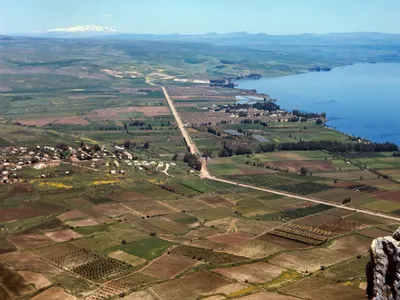
The Galilee in Israel with Mt Hermon in Background
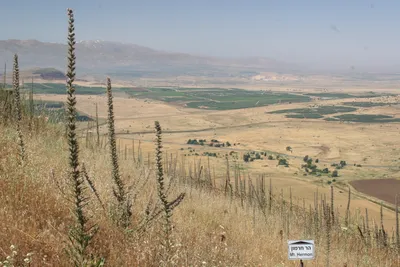
Mt. Hermon in the Summer (with Sign)
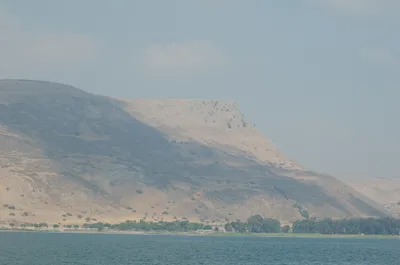
Mt. Arbel from the Sea of Galilee
1Why do the nations rage,
and the peoples plot a vain thing?
2The kings of the earth take a stand,
and the rulers take counsel together,
against Yahweh, and against his Anointed, saying,
3“Let’s break their bonds apart,
and cast their cords from us.”
4He who sits in the heavens will laugh.
The Lord will have them in derision.
5Then he will speak to them in his anger,
and terrify them in his wrath:
6“Yet I have set my King on my holy hill of Zion.”
7I will tell of the decree:
Yahweh said to me, “You are my son.
Today I have become your father.
8Ask of me, and I will give the nations for your inheritance,
the uttermost parts of the earth for your possession.
9You shall break them with a rod of iron.
You shall dash them in pieces like a potter’s vessel.”
10Now therefore be wise, you kings.
Be instructed, you judges of the earth.
11Serve Yahweh with fear,
and rejoice with trembling.
12Give sincere homage to the Son, lest he be angry, and you perish on the way,
for his wrath will soon be kindled.
Blessed are all those who take refuge in him.