Search

1Then Jesus was led up by the Spirit into the wilderness to be tempted by the devil. 2When he had fasted forty days and forty nights, he was hungry afterward. 3The tempter came and said to him, “If you are the Son of God, command that these stones become bread.”

4But he answered, “It is written, ‘Man shall not live by bread alone, but by every word that proceeds out of God’s mouth.’”

5Then the devil took him into the holy city. He set him on the pinnacle of the temple, 6and said to him, “If you are the Son of God, throw yourself down, for it is written,

‘He will command his angels concerning you,’ and,

‘On their hands they will bear you up,

so that you don’t dash your foot against a stone.’”

7Jesus said to him, “Again, it is written, ‘You shall not test the Lord, your God.’”

8Again, the devil took him to an exceedingly high mountain, and showed him all the kingdoms of the world and their glory. 9He said to him, “I will give you all of these things, if you will fall down and worship me.”

10Then Jesus said to him, “Get behind me, Satan! For it is written, ‘You shall worship the Lord your God, and you shall serve him only.’”

11Then the devil left him, and behold, angels came and served him.

12Now when Jesus heard that John was delivered up, he withdrew into Galilee. 13Leaving Nazareth, he came and lived in Capernaum, which is by the sea, in the region of Zebulun and Naphtali, 14that it might be fulfilled which was spoken through Isaiah the prophet, saying,

15“The land of Zebulun and the land of Naphtali,

toward the sea, beyond the Jordan,

Galilee of the Gentiles,

16the people who sat in darkness saw a great light;

to those who sat in the region and shadow of death,

to them light has dawned.”

17From that time, Jesus began to preach, and to say, “Repent! For the Kingdom of Heaven is at hand.”

18Walking by the sea of Galilee, he saw two brothers: Simon, who is called Peter, and Andrew, his brother, casting a net into the sea; for they were fishermen. 19He said to them, “Come after me, and I will make you fishers for men.”

20They immediately left their nets and followed him. 21Going on from there, he saw two other brothers, James the son of Zebedee, and John his brother, in the boat with Zebedee their father, mending their nets. He called them. 22They immediately left the boat and their father, and followed him.

23Jesus went about in all Galilee, teaching in their synagogues, preaching the Good News of the Kingdom, and healing every disease and every sickness among the people. 24The report about him went out into all Syria. They brought to him all who were sick, afflicted with various diseases and torments, possessed with demons, epileptics, and paralytics; and he healed them. 25Great multitudes from Galilee, Decapolis, Jerusalem, Judea, and from beyond the Jordan followed him.

Place

Sea of Galilee

Type
Water
Location
32.814, 35.591

The Sea of Galilee

Site Study | Hershel Wayne House | Sea of Galilee

The Sea of Galilee, also known as the Lake of Gennesaret or the Sea of Tiberias,1 is actually what we would consider a moderately sized lake. It is 13 miles long, 8 miles wide, about 33 miles in circumference, and about 140 feet deep. It is also the second-lowest lake in the world (behind only the Dead Sea 65 miles south), at approximately 670 feet below sea level. It is surrounded by high hills, up to 2,000 feet above the lake. Due to the unique geography of the area where the lake is located, it is known for sudden, violent storms.2

The Sea of Galilee is an important part of the region, providing water for drinking and irrigation, as well as fishing and easy transportation. It is not surprising that Jesus’ Galilean ministry was focused on the area around the lake. Here in Matt 4:18, Jesus called His first disciples while “walking beside the Sea of Galilee.”

Although most archaeological remains in the area are found on the shores of the Sea of Galilee, the “Galilee boat3” (popularly called “Jesus Boat”),4 was submerged for two thousand years, and only discovered during an unusually dry period by two local fishermen, the brothers Uval and Moshe Lufan. Ancient remains of harbors have also been discovered in the shallows near the shore, such as at Capernaum.5 Many other important towns mentioned in the New Testament are found on the shores of the lake including Bethsaida,6 Magdala7, and Tiberias8. Several others were located on the slopes of the hills around the lake, including Chorazin9, Hippos-Susita10, Gamla11, and Gadara12.


  1. Merrill F. Unger, Archaeology and the New Testament, (Grand Rapids, MI: Zondervan, 1962) 125-126. ↩︎

  2. See Matt 14.24. ↩︎

  3. See John 6:17 ↩︎

  4. The "Galilee Boat," sometimes called the "Jesus Boat" is located at Kibbutz Ginosaur Museum. ↩︎

  5. Capernaum, the home of James and John, is along the western shore of the Sea of Galilee (aerial). ↩︎

  6. Possibly the site of Bethsaida (aerial) is at the northern tip of the Sea of Galilee. ↩︎

  7. Magdala (aerial), the city of Mary of Magdala (Magdalene) is on the western shore of the Sea of Galilee, lower than Capernaum. ↩︎

  8. Tiberias (aerial) was a Gentile city in the days of Jesus and is not given as a city that Jesus visited. ↩︎

  9. Chorazin (panorama) is a short distance west of the Sea of Galilee, not on the coast. ↩︎

  10. Hippos-Susita (also known as Antiochia-Hippos) is a little over a mile east of the Sea of Galilee and was a Gentile city. ↩︎

  11. Gamla (Hebrew word for camel) is a city built on a small mountain shaped like the back of a camel, that was defeated by the Romans soon after the Jewish rebellion in A.D. 66, and where General (Titus) Flavius Josephus was captured by the Roman army. ↩︎

  12. Gadara, one of the cities of the Decapolis (ten cities) of New Testament times, is more than 1200 feet above sea level, bordering on Israel and Syria, and overlooks the Sea of Galilee several miles away. The Arabic name is Umm Qais. Some have argued that Gadara was the city near where Jesus cast out demons into a herd of pigs that went down into the Sea of Galilee, but this is unlikely in view of the distance from the Sea. ↩︎
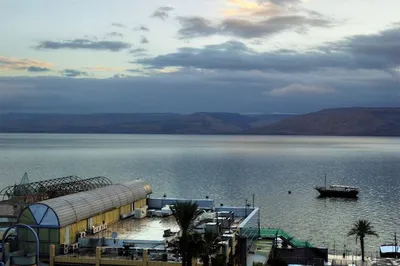
Western Side Sea of Galilee (or Lake Kinnerth)

Western Side Sea of Galilee (or Lake Kinnerth)

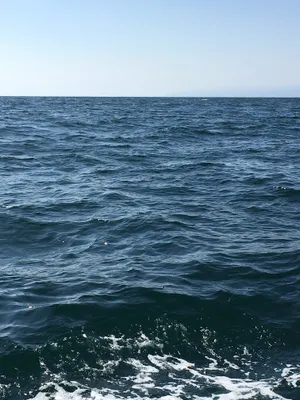
Shore of the Sea of Galilee; taken for author by RG

Storms on the Sea of Galilee (Lake Kinneret)

Site Study | Hershel Wayne House | Sea of Galilee

The Sea of Galilee (actually a lake, called Lake Kinneret by the Jews) is legendary for having sudden, violent squalls. These storms can develop from blue skies in an hour or less, and may only last thirty minutes. These storms can produce relatively large waves and strong winds during that short period. The unique geography of the lake lends itself to unsettled weather patterns that can produce storms that seemingly come from nowhere, and end as quickly as they started.

The Sea of Galilee is over six hundred feet below sea level, and is surrounded by high hills, some of which are as much as two thousand feet above the lake. The area to the east of the lake is arid, but cooler than the air around the lake two thousand feet below, while winds off the Mediterranean Sea to the west of the Sea of Galilee bring cooler, moist air. When these competing masses of air meet it produces unsettled masses, and many times, storms. Because the Sea of Galilee is relatively shallow compared to its area, strong winds can quickly produce waves quite large for a body of water its size. One storm in March 1992 produced ten foot high waves that swept into downtown Tiberias, causing extensive damage.

The Sea of Galilee

The Sea of Galilee

Person & place data: Theographic Bible Metadata by Robert Rouse (Viz.Bible), CC BY-SA 4.0.