Ephesians 1 (WEB)
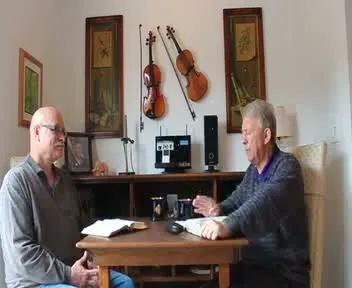
Dr. House sat down with a local pastor Stephen Hopkins of Calvary Chapel in Salem, Oregon, to discuss biblical and theological topics. On this day they discuss God's sovereignty, as to whether He is partially sovereign. Does God care about the small things in our life, as well as the large?
So Wayne, what about this issue of the sovereignty of God and the responsibility of man?
Is God totally sovereign?
Does He limit His sovereignty?
Choose people?
Do we choose him?
Or is it, as they say, a philosophical car wreck where you've got two objects, antinomy, where you have two objects actually trying to occupy the same place at the same time, and to take away from one is to diminish the whole.
What about that?
Well, you added a lot in that statement.
That's going to take about 15, 20 hours.
I'm sure.
Let me see if I can break out some of those things and you can remind me.
The word totally sovereign in reference to an infinite deity is almost a redundancy.
That's right.
Because if you have a God who's infinite, who existed prior to time and space, who is beyond time and space, who is also immanent within time and space without becoming part, he's not identical to creation, but he is everywhere creation is.
He doesn't exist within creation, but there is no place that the material existence and the creation world is not at the same place God is.
They're together there.
If you have a God who's infinite, to talk about temporal sovereignty doesn't make a lot of sense.
And so, I think I'm going to turn that thing off.
That's just getting in the way.
I prefer to use the word sovereign.
He's either sovereign as an infinite deity or he's not sovereign.
He doesn't limit it?
He doesn't set aside any part of it?
No. A sovereign being cannot be less than sovereign as an infinite being.
Makes sense.
If he's an omnipotent being, he's all-powerful.
If he's an all-knowing being, all-present being, all-beneficent being, anything you want to say, then he can't be other than the God who is sovereign.
He has to be a sovereign being.
Temporal sovereignty or partial sovereignty is like partial omniscience.
I know everything, sort of.
I know everything a little bit.
It's a meaningless terminology.
What people want to argue with partial sovereignty is that, well, God allows us to do things apart from him telling us to do them.
Or God allows us to make choices without him forcing our hand.
I'm not willing to surrender God's sovereignty to get me something.
To me, that's a little…
That's an uncomfortable move for me to say in order that I can have freedom, I need to limit God.
If I have to make a choice, and I don't think I do, between God and me, I'll go God.
If I'm a Christian, at least if I'm a biblical thinking Christian, I've got to defer to God in this discussion.
If I have to err on either side, I'm going to err on God's side.
But I don't think you have to do that.
God is sovereign.
In the sense that nothing escapes him.
And I've had people say, well, my goodness, God doesn't care about all these things.
God doesn't care what tie I wear.
God doesn't care what food I eat.
God doesn't care.
He only cares about the big things.
He's sovereign in the really big things of life.
Yeah, what's big to him?
An infinite deity, big and small.
For example, is it more difficult for God to lift a thousand-pound rock than, let's say, a five-pound rock?
There's no difference.
For an infinite being, it's an irrelevant discussion.
It's no more difficult.
God doesn't expend more energy for his infinite, limitless energy.
And those are the same term.
Infinite and limitless is the same concept.
And so he's not partially sovereign, and he doesn't lose any sovereignty.
He doesn't lose any power.
God is over everything.
There's nothing that escapes Him.
And people who say that God doesn't care about what tie I wear, I want to ask a question.
Does God care how many hairs you have on your head?
Well, metaphorically speaking.
Well, for you, that's true.
He knew how many you had.
That's right.
And He knows how many I have.
Just think about that.
Why would God care how many hairs I have on my head?
When somebody says He doesn't care what kind of tie I wear, I'm saying, really?
Really?
So why would he care about how many hairs I have if he doesn't care about which tie I wear?
Or why should God care about these little decisions of whether I decide to go with this movie or that movie tonight, unless it be a porno movie or something, or maybe a wrong movie that's morally wrong?
Or why would God care whether I decide to go to this school or that school?
If he cares about even a little bird falling to the ground, and he says if you're not more valued than the bird — do we really know who God is?
When people talk that way, I'm thinking, have you ever read the Bible?
For if God cares about how many hairs I have and he cares about the birds and he cares about the lilies, then he cares about everything.
So he does care.
Now, does that mean that God, when I get ready to reach for the tie, he grabs hold of my hand and my hand has been gradually moved to the right tie?
I want to go this tie.
No, no, this tie.
You know, I'm sort of, okay.
And God got me to the right tie.
I don't think there's a sense of coercion.
And yet I must feel that there's something about God's involvement that I don't pick the wrong one.
And you must say, who would care?
And by the way, I'm picking something here fairly mundane in our way of thinking to illustrate it, because it's what is called an a fortiori argument.
If I'm correct here, surely I'm correct about more significant decisions, the big ones.
Does God care?
Well, I think he does because I will pick the tie that in fact fits within the sovereign plan of God.
But I'll do so without coercion.
And I'll explain what I mean by sovereignty here as we move along.
I think to keep this discussion on sovereignty here we're doing within these little 10-minute frameworks, we'll try to cover them.
Let's talk about the tie.
The fact is, if I don't believe that me picking this tie over against that tie is significant, then I have to come to grips with certain other issues.
For example, what if someone were to see my tie and I didn't know them?
And they say, oh, that's a tie just like I have.
And they said that.
Or they were attracted to me because of my tie.
And the fact got their attention and maybe they talked to me.
Or whatever.
Could those situations be used by God for me to strike up conversations with people, for people to come to Christ even eventually?
Or for some kind of reaction to take place.
Could it be that what I choose at a given time will be used by God for some other purpose that He has that I don't even know of?
Or take this.
When you're driving down the road and somebody almost hits you, misses you by one second.
If you'd been one second sooner, they would have hit you.
Have you ever had a situation like that?
Yeah, a couple of them.
Do you realize that those seconds are counted all the way back to the tie?
Which one should I pick?
Now I'm going to take this one.
One second took place in that day in decision making that relates to the fact that one second here I missed something that would have happened.
Now if you don't believe those kind of things take place, then how do you deal with the fact of saying, God, thank you for delivering me from that wreck?
What did God have to do with it?
I think you…
God is involved in the infinite little bitty things of life.
So that when I make decisions…
Even the seconds.
Even the seconds.
Milliseconds.
Milliseconds.
He's an infinite deity.
And it's all moving towards something then?
He's got a plan.
He's got a plan.
He's got a plan for each day.
He's got a plan for each week and century.
And he's got an ultimate plan.
God is moving the world from creation to the end of days, as we sometimes hear, or let's just use the term for us, new heavens and new earth.
He's moving things toward an end that's his final purpose for the universe.
He created the universe with a purpose, and he's moving that universe toward that purpose.
Now, having said that, I wanted to say that I'm not denying that we make decisions, and I'll come back to that.
But it's important we start with the sovereignty of God.
What does that mean?
God is in absolute charge of his creation.
Absolute charge.
1Paul, an apostle of Christ Jesus through the will of God, to the saints who are at Ephesus, and the faithful in Christ Jesus: 2Grace to you and peace from God our Father and the Lord Jesus Christ.
3Blessed be the God and Father of our Lord Jesus Christ, who has blessed us with every spiritual blessing in the heavenly places in Christ, 4even as he chose us in him before the foundation of the world, that we would be holy and without defect before him in love, 5having predestined us for adoption as children through Jesus Christ to himself, according to the good pleasure of his desire, 6to the praise of the glory of his grace, by which he freely gave us favor in the Beloved. 7In him we have our redemption through his blood, the forgiveness of our trespasses, according to the riches of his grace 8which he made to abound toward us in all wisdom and prudence, 9making known to us the mystery of his will, according to his good pleasure which he purposed in him 10to an administration of the fullness of the times, to sum up all things in Christ, the things in the heavens and the things on the earth, in him. 11We were also assigned an inheritance in him, having been foreordained according to the purpose of him who does all things after the counsel of his will, 12to the end that we should be to the praise of his glory, we who had before hoped in Christ. 13In him you also, having heard the word of the truth, the Good News of your salvation—in whom, having also believed, you were sealed with the promised Holy Spirit, 14who is a pledge of our inheritance, to the redemption of God’s own possession, to the praise of his glory.
15For this cause I also, having heard of the faith in the Lord Jesus which is among you and the love which you have toward all the saints, 16don’t cease to give thanks for you, making mention of you in my prayers, 17that the God of our Lord Jesus Christ, the Father of glory, may give to you a spirit of wisdom and revelation in the knowledge of him, 18having the eyes of your hearts enlightened, that you may know what is the hope of his calling, and what are the riches of the glory of his inheritance in the saints, 19and what is the exceeding greatness of his power toward us who believe, according to that working of the strength of his might 20which he worked in Christ when he raised him from the dead and made him to sit at his right hand in the heavenly places, 21far above all rule, authority, power, dominion, and every name that is named, not only in this age, but also in that which is to come. 22He put all things in subjection under his feet, and gave him to be head over all things for the assembly, 23which is his body, the fullness of him who fills all in all.