1 John 1 (WEB)
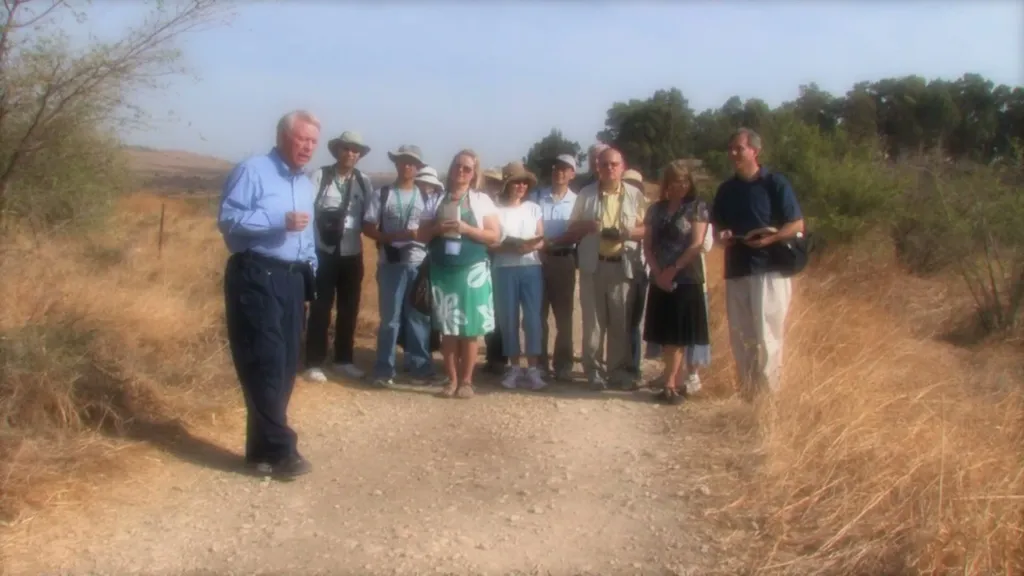
Biblical Faith (Judaism and Christianity) requires a connection to God's acts in history and the biblical text, not simply believing without any facts. The Word did not only dwell with God, create the universe, but he came into human existence and dwelt among us, in the land of Israel. The historical reality of Jesus is beyond that of any other religion than Christianity because there is not simply a list of rules or morals, as important as some of these may be, but God walked among us as a man to show Himself and become our guide to Him. The apostles, who were eyewitnesses, make clear that Jesus was an historical human being, and they ask us to believe their testimony.
Standing on the shores of the Galilee here in Israel is a really exciting experience, but it also is very reflective for me, because it tells me that there's a great importance in having a connection to the geography of this land.
What we find is that there are many religions in the world, but most of these religions, their connection to time and space history is not really much more than the Lord of the Rings with Middle Earth,
or some other kind of story in which you have a moral that you want to tell, but it's not connected to real life.
And so Christianity is very important, in contrast to other world religions, in that our faith is built into the fabric of time and space history.
Because it's not merely that God created the world and that He observes our happenings.
But that even beginning with Exodus chapter 3, when He tells the Israelites who have been in bondage for 400 years…
He tells Moses that, tell them that the I Am, the one who is always with you, is here.
But then he gives one more bit of information which is phenomenal.
He says, and tell them I have come down to lead you out.
That is, God moves outside of time and space to move in experience into our lives, and to actually lead us, so that we have someone really to follow.
But that particular idea does not receive its full fruition until we have God in the flesh.
God who actually enters into our experience, not merely observing us and not merely leading us, but actually becoming one of us.
The creator of the universe, pure spirit, that person took upon himself humanity and dwelt among us.
And as Peter said, we have seen his glory, glory is of the only begotten of the Father, full of grace and truth.
So that, unlike other religions, not merely is it tied to history, because there are religions that do have some tie to history, like in Islam, and certainly religions that teach moral principles, like Buddhism and Hinduism and others.
But a religion in which those things are true, but God Himself became part of us, dwelt among us, knows our pains, knows our difficulties, knows our frailty.
He knows something about us.
And when you look at the land, it brings to bear the fact that if these things never really happened, then the Christian faith is a big hoax.
You can't just merely believe something.
You must really know that something happened.
Faith must not be built upon speculation.
Faith must be built upon fact.
Now, we don't claim in the issue of faith that we know everything, but you do not have to know everything to know something.
And so we can know some things to be true even if we don't have a full comprehension of everything that could be known.
I can gather bits of information that provide facts for me to know how I should act, even if I have not studied the world in its entirety.
1That which was from the beginning, that which we have heard, that which we have seen with our eyes, that which we saw, and our hands touched, concerning the Word of life 2(and the life was revealed, and we have seen, and testify, and declare to you the life, the eternal life, which was with the Father, and was revealed to us); 3that which we have seen and heard we declare to you, that you also may have fellowship with us. Yes, and our fellowship is with the Father and with his Son, Jesus Christ. 4And we write these things to you, that our joy may be fulfilled.
5This is the message which we have heard from him and announce to you, that God is light, and in him is no darkness at all. 6If we say that we have fellowship with him and walk in the darkness, we lie and don’t tell the truth. 7But if we walk in the light as he is in the light, we have fellowship with one another, and the blood of Jesus Christ his Son cleanses us from all sin. 8If we say that we have no sin, we deceive ourselves, and the truth is not in us. 9If we confess our sins, he is faithful and righteous to forgive us the sins and to cleanse us from all unrighteousness. 10If we say that we haven’t sinned, we make him a liar, and his word is not in us.